The Future Predictions for Salesforce AI Agents in 2026
In recent times AI has seen a drastic shift from a reactive assistant into an active work participant. The shift accelerated through 2025 as enterprises saw generative AI agents evolve beyond simple prompts. As in 2026 the momentum will only go up. AI adoption has surged, businesses still think cautiously to go all-in with it.
Future Predictions for Salesforce AI Agents in 2026
The following rundown brings together the predictions and trends making path for Salesforce agentic AI in 2026.
The Rise of Proactive, Multi-Agent Systems
The next wave of AI will resemble a coordinated team rather than a single model answering questions. Leaders predict that enterprises will adopt an orchestrated workforce model where multiple specialized agents operate under a central orchestrator. This structure mirrors human teams: one system sets goals and policies while smaller agents perform focused tasks with precision.
Key shifts
- From monolithic AI to coordinated teams: Agents will collaborate across sales, service, marketing, and operations, sharing data and context.
- Humans as supervisors, not operators: Teams will use observability tools to set boundaries, monitor ethics, and guide AI performance.
- Outcome-driven agents: Instead of giving an agent instructions, organizations will define goals such as improving NPS, accelerating deals, or automating root-cause analysis. The agent will dynamically plan and execute on those objectives.
Organizations that fail to move beyond single, isolated agents will face a productivity ceiling. Enterprise success will rely on interoperability, shared context, and unified governance.
Trusted Agentic AI Becomes a Competitive Advantage
As AI becomes central to customer engagement, brand identity will evolve. By 2026, a company’s agent will act as its most consistent representative — answering queries, solving problems, and managing relationships.
What will set leaders apart
- AI identity as a brand identity: Customers will judge brands based on the intelligence, reliability, and personalization delivered by their agents.
- Relational intelligence: Experiences that recall preferences, history, and intent will win over generic chatbot interactions.
- Instruction adherence as a new KPI: Reliability will be measured by how consistently an agent follows instructions. CIOs will demand measurable adherence scores before deploying agents at scale.
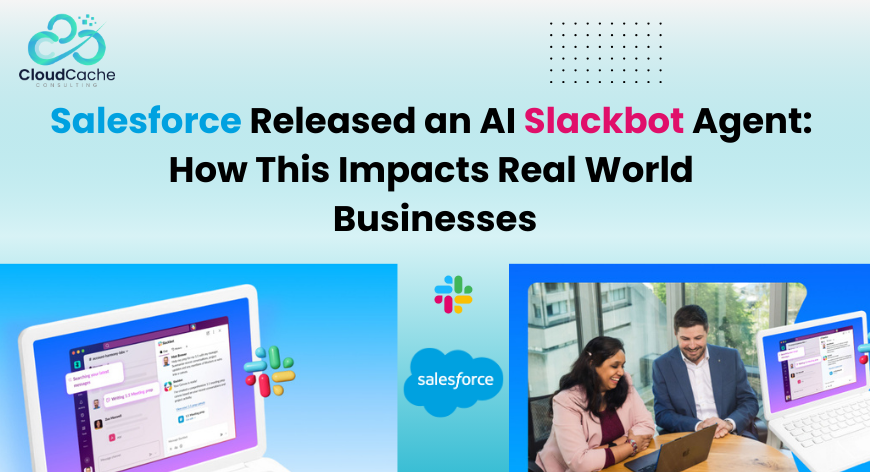
- Connected intelligence: Enterprises that integrate humans, processes, and AI into one shared context — especially through platforms like Slack — will operate at the speed of intent, not tasks.
Trusted AI will become a driver of shareholder value. Transparent governance, explainability, and outcome evidence will matter as much as revenue growth.
Emerging and Unexpected Use Cases of Agentic AI
AI agents will move far beyond productivity assistance and customer support. Several new domains are poised for acceleration:
Proactive cybersecurity
Agents will detect anomalies, assess risk patterns, predict threats, and initiate responses without human involvement. Instead of reacting, organizations will anticipate and neutralize attacks earlier.
Spatially intelligent models
New architectures trained on 3D data will push robotics, automation, and simulation forward. These capabilities will unlock more immersive planning, safer automation, and richer virtual environments for enterprise learning.
Self-healing security systems
Inspired by biological immune systems, agents will monitor the health of workflows instead of simply monitoring endpoints. Once they detect abnormal behavior, they will isolate the issue and deploy fixes instantly.
Democratized development
Low-code and vibe coding trends will create a new class of personal applications. Non-technical employees will build apps to solve micro-problems using enterprise data, leading to faster experimentation and more bottom-up innovation.
Ambient intelligence
Better voice interfaces, smarter autocomplete, and always-on agents will reduce dependency on screens.
Impacts on the Workforce
Engineering culture transforms
AI-native engineers will become common, accelerating onboarding and collaboration. Senior engineers will share architectural knowledge while gaining exposure to new AI-driven techniques. Teams that formalize these partnerships could ship features up to 50% faster.
Sustainability becomes a strategic AI priority
Water usage is becoming a major consideration in AI compute. Enterprises will explore optimizations that reduce consumption while improving performance and latency.
Government upskilling accelerates
Federal programs are expected to move quickly to foster AI readiness among public servants. AI will be seen as an enabler for modernized services, not a threat to roles.
What Businesses Need To Sustain
Core requirements
- Trusted data architectures: Without reliable data, autonomous agents cannot act with confidence.
- Simulation capability: Training agents in accelerated digital environments will elevate learning and reduce real-world risk.
- Human oversight models: High-level guidance and supervision will remain essential to guide goals and ensure ethical behavior.
Final words
2026 is shaping up to be the year when companies stop experimenting with agents and start operationalizing them. It is becoming the new operating model — and 2026 is the year organizations decide whether they want to lead it or follow it.
As a Salesforce Summit Consulting Partner, CloudCache Consulting helps organizations design, implement, and scale AI-driven solutions on the Salesforce platform. Our Salesforce Professional library makes it easier for customers to discover and engage with our services within the Salesforce ecosystem.
For more such updates, keep checking CloudCache Consulting.